


From Special Ops to “Unstandard” Consulting: The Story of Black Mountain Strategies
After combat deployments, traumatic brain injuries, and years inside the U.S. defense system, Charles Hatley and Brandon Mendez Lynch decided to attack a different front: the broken connection between small, innovative companies and the warfighters who desperately need their technology.
Interview
After combat deployments, traumatic brain injuries, and years inside the U.S. defense system, Charles Hatley and Brandon Mendez Lynch decided to attack a different front: the broken connection between small, innovative companies and the warfighters who desperately need their technology.
Today, as co-founders of Black Mountain Strategies, they help emerging tech and mission-driven businesses secure non-dilutive federal funding, navigate complex government pathways, and get life-saving tools into the hands of soldiers — all while remaining proudly “unstandard” consultants.
Q: Charles, start us off. What was your background before launching Black Mountain Strategies?
Charles Hatley: I call Arizona home, but I’m a military brat. I was born in the Philippines, moved around a lot, and eventually did ROTC at Arizona State. I was commissioned into the Air Force and went straight to flight school.
The easiest way to explain my job is Top Gun: I was Goose — the back-seater. Except I survived.
I spent a year in flight school in Pensacola and then flew two airframes:
- The RC-135, the Air Force’s premier ISR (Intelligence, Surveillance, Reconnaissance) “spy plane.”
- The EC-130, a tactical electronic attack platform supporting Tier One guys on the ground — Navy SEALs, Rangers, coalition special operations forces.
I deployed, did my time overseas, and then everything changed. In 2018, I was in a really bad car accident with my family. My wife and two daughters were in the car.
My wife was actually declared dead at the scene. They pulled her out, she came back to life, and spent about four weeks in rehab. I was out for about 24 hours and suffered a traumatic brain injury.
About a year later, I was in Afghanistan and caught the wrong side of an IED blast. That was TBI number two. Back-to-back TBIs aren’t compatible with flying, so I saw the writing on the wall.
Q: How did you pivot out of flying after that?
Charles Hatley: I still wanted to serve, so I got a position teaching at the Air Force’s officer leadership school, Squadron Officer School.
For two years, I taught leadership, management, and joint warfare. It was one of my favorite assignments, but by then I had 11 years of service. I realized that, as much as I respect the military, the promotion system is built on time and structure. I wanted to do more, faster, and build my own path.
So while I was still on active duty, I started building businesses:
- A sports nutrition company in 2016 that I later sold in 2021.
- Then co-founded Las Vegas’ first non-alcoholic kava and kratom bar in 2023. I’m still a co-owner and investor there.
Black Mountain Strategies is my third business — and the one that most closely ties back to the mission we had in uniform.
“I realized that, as much as I respect the military, the promotion system is built on time and structure. I wanted to do more faster, and build my own path.”
Q: What exactly does Black Mountain Strategies do?
Charles Hatley: We help small and mid-size companies crack the federal market — especially in defense — using non-dilutive funding and strategic business development.
Most founders, when they need capital, go straight to VCs or private equity. They give up equity, accept tough terms, and sometimes lose control of their companies.
We take a different approach. Black Mountain Strategies is a multi-venture company: while defense remains our core focus, we also support other commercial ventures under the organization that are not defense-related.
Our job is to help founders access federal money — often seven to eight figures — without giving up equity, while building businesses that can scale sustainably across both government and commercial markets.
In short, we open a whole new revenue line — the federal market — in a way that’s realistic for a small company.
Q: Brandon, your story is wild. How did you end up in this world?
Brandon Mendez Lynch: I’m originally from Argentina. I grew up in a pretty tough situation. My brother and I were at the center of an international parental kidnapping case — twice — under the Hague Convention.
My mom took us from Argentina to the U.S. We changed our names, went into hiding, and ended up on the Missing Children Network. ABC News did a story on us; my brother literally chained himself to a courthouse in Argentina at one point.
The people who helped us most were embassy staff, federal agents, government people. They were the ones trying to find us and reunite us with our dad. That was my first real contact with the U.S. government, and I remember thinking: these people are actually changing lives.
I wanted in. I didn’t have money, but I wanted a top education and a path to serve, so I fought my way into the U.S. Air Force Academy. Marco Rubio endorsed me for admission.
I graduated, became an intelligence officer, and spent seven years in special operations, including work with the NSA, DIA, and one of the three-letter agencies. I finished my career in that world, and that’s where I saw, over and over, what tech we wished we had on missions.
Q: How did the two of you meet and decide to build something together?
Charles Hatley: When I got out of the military, I joined a defense consulting firm. Brandon was there too. That’s where we saw how much impact we could have by helping companies navigate the federal side.
We worked with drone companies, mental health apps, fitness platforms, quantum computing firms — you name it. We helped CEOs and CTOs understand how to go after federal opportunities and non-dilutive funding instead of just chasing private capital.
We also both had TBIs and had both been in Afghanistan. We’d been on missions where we thought, man, if we had access to this one piece of tech, things would be different.
Meanwhile, startups already had that tech — they just didn’t know it could be used by the government or how to get it there. That disconnect bothered us.
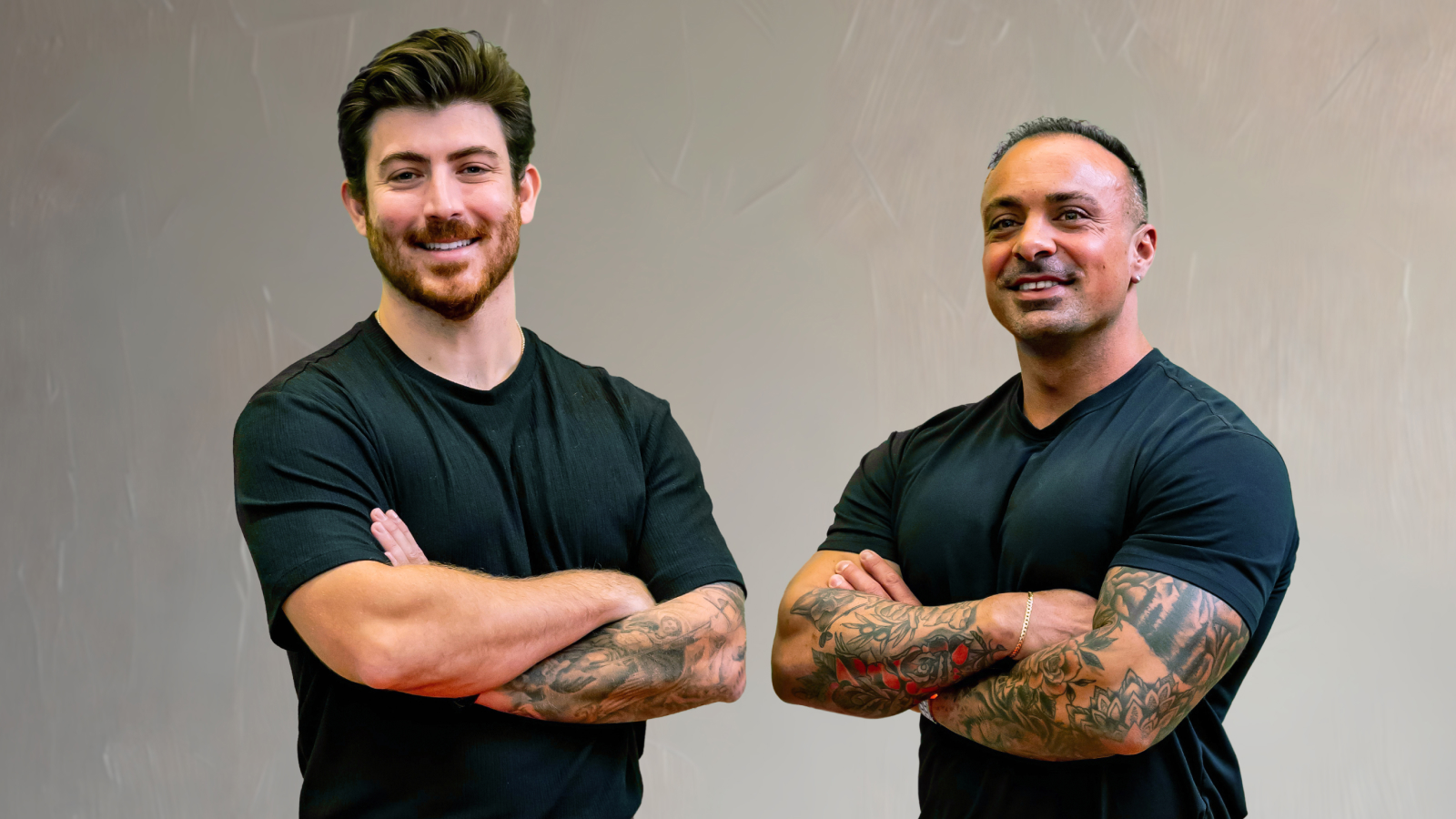
We learned a ton at that firm, but we’re not “by-the-book” guys. We’re operators. We’re tattooed, blunt, and very non-standard. We wanted to help companies in ways that didn’t fit the corporate mold — connect them to VCs, international militaries, do sales, build ecosystems.
So we left and started Black Mountain Strategies to do it our way.
“We open a whole new revenue line — the federal market — in a way that’s realistic for a small company.”
Q: You call yourselves “unstandard consultants.” What does that actually mean in practice?
Brandon Mendez Lynch: The world is full of consultants who will happily send you a big invoice and give you vague advice. That’s not us.
We are:
- Mission-driven. We care whether the tech actually makes a difference for warfighters and end users.
- Blunt. If your tech isn’t ready, we’ll tell you. We’d rather not take your money than waste it.
- Deeply connected. When we see a need, we don’t say, “We’ll figure it out.” We say, “My buddy Ziggy is deployed and could use this exact solution. Let’s call him.”
We also refuse to be generalists. If you’re selling commodity pencils, we’re not your guys. If you’re building technology that can save lives, solve real problems, or meaningfully move the needle, that’s when we lean in.
Q: Charles, you mentioned people died on a mission because equipment failed. How did that shape your mission now?
Charles Hatley: There’s one mission that sticks with me. I won’t go into all the details, but people died because a critical piece of equipment failed.
It was supposed to be serviced by a big prime contractor. The issues were known and still weren’t fixed in time.
That day, I was furious. It was impossible not to think: there are small, hungry companies out there who could build this better and faster — if only they knew how to get into this system.
The government is already trying to push more opportunities toward small businesses. The problem is the gap: small companies don’t know how to navigate the bureaucracy, and the system doesn’t speak their language.
Black Mountain is our way of closing that gap.
Q: A lot of founders think “government funding” is impossible. How do you make it realistic for them?
Charles Hatley: Most founders see federal funding as a black box. They imagine spending a fortune on lawyers and getting lost in red tape.
We break it down into three big pieces:
- Opportunity mapping
We identify programs where their tech actually fits — things like open-topic solicitations where the government literally says, “Show us why we need this.” - Admin & compliance
We handle the administrative headache: registrations, compliance, contracting, reporting. All the stuff that would normally require a full-time BD hire or a very expensive consultancy. - Strategic packaging & BD
We help them tell the right story in proposals and then go find the actual stakeholders — units, commands, agencies — who have the problem and the budget.
We do all that for less than the cost of hiring an in-house BD team, and often less than what traditional firms charge just to write a proposal.
Q: Can you share a concreate example of the kind of technology you help bring to government?
Charles Hatley: One example — without naming the company — is a multi-face secure phone.
On the surface, it looks like a regular smartphone. You put in one password, and you see normal messages, photos, apps — the “nothing to see here” version.
But if you enter a second password, it opens a fully encrypted environment with sensitive data. A third password wipes the encrypted layer while still showing the normal, harmless phone.
Think about an undercover agent, an operator overseas, or even a high-profile CEO or attorney. If they’re forced to unlock their phone, they can show the “safe” profile and stay alive — or protected — without having to resist and escalate the situation.
That tech has obvious applications for intelligence and defense, but it also has a large commercial market. The beauty of taking it through R&D funding with the government is:
- The product evolves in partnership with end users.
- The company gets non-dilutive capital to build it.
- Once contracted, they gain enormous credibility and authority that helps in the commercial market too.
Q: What’s your vision for Black Mountain Strategies over the next 24-36 months?
Charles Hatley: In the next few years, we want Black Mountain to be the firm people think of when they say, “We’ve built something important — how do we get it into the federal space and scale it the right way?”
That means:
- Completing our “Thanos glove” of partners — VCs, M&A firms, CMMC compliance experts, international sales partners — all aligned around defense and mission-driven tech.
- Building a strong track record of wins: funded projects, deployed tech, real outcomes.
- Staying small and effective by choice — we don’t want to be the biggest firm. We want to be the firm you call when it matters.
Long term, we’d like to create our own fund — a fund that actually cares about small businesses and mission impact. Not just, “Send us your pitch deck and we’ll ghost you.” We’d fund, advise, connect, and help build enduring companies.
Q: And what do you need most right now to make that vision happen?
Brandon Mendez Lynch: Partnerships and trust.
We’re brand new as a firm, but our experience and networks are not. What we need is:
- Forward-thinking VCs, PE firms, and M&A groups who want a pipeline of vetted, defense-relevant companies.
- Companies with real tech and a real mission that are ready to explore the federal market.
- And ecosystems like Board of Advisors, where the right introductions can change everything for everyone at the table.
Authority and credibility come from results. The more we can deliver wins together, the more value we can create for founders, investors, and warfighters alike.