


James Cordier: Lessons From the Commodities Markets
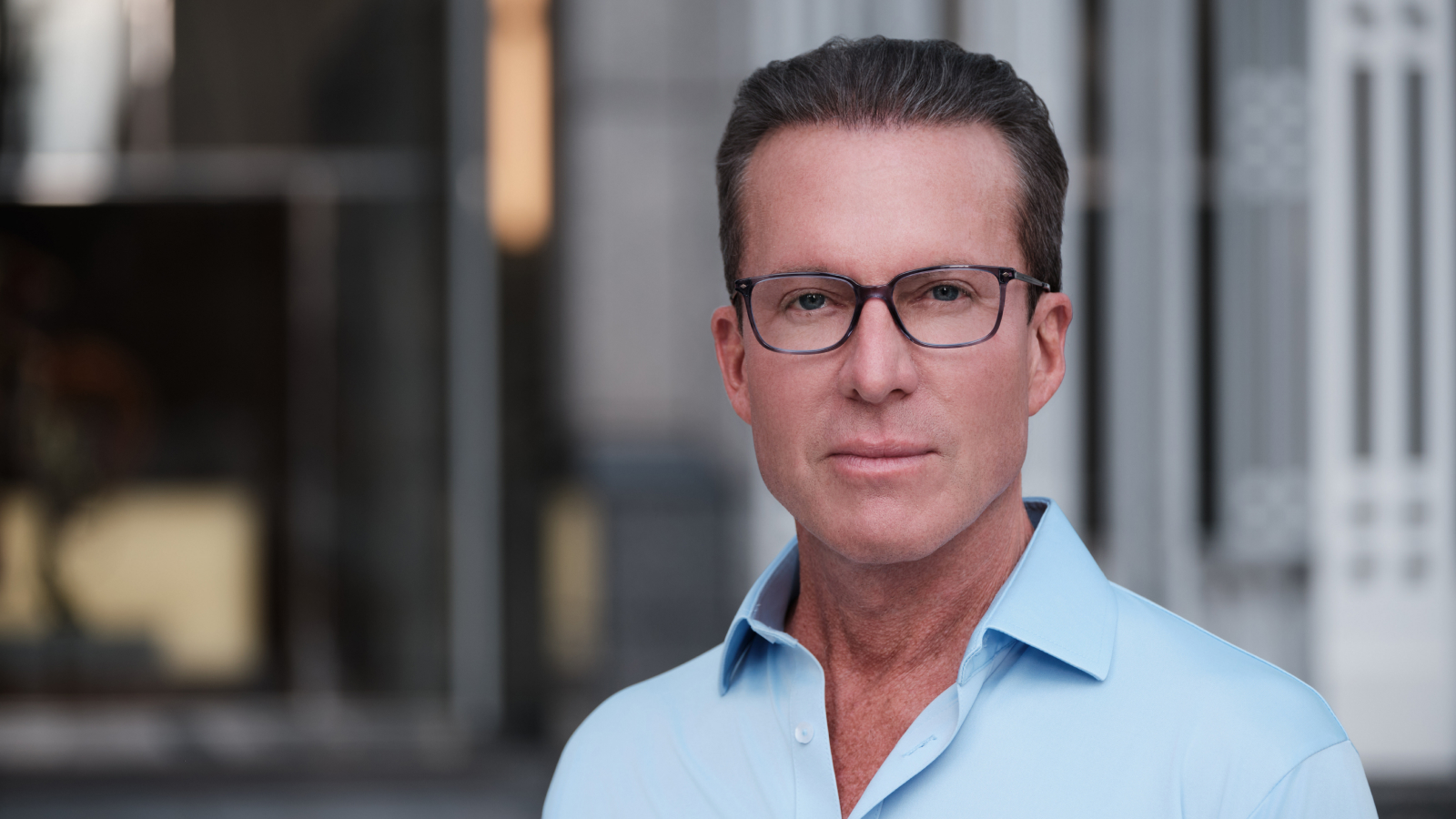
James Cordier is the founder and president of OptionSpreaders.com, an investment firm focused exclusively on commodities options and designed to bring professional-grade option selling strategies to sophisticated investors.
Over more than two decades in the markets, Cordier has built a reputation as a leading authority on commodities, known for translating complex risk structures into disciplined, repeatable strategies.
Interview
James Cordier is the founder and president of OptionSpreaders.com, an investment firm focused exclusively on commodities options and designed to bring professional-grade option selling strategies to sophisticated investors.
Over more than two decades in the markets, Cordier has built a reputation as a leading authority on commodities, known for translating complex risk structures into disciplined, repeatable strategies. His work has consistently bridged the gap between institutional-level trading and investors seeking a more structured, risk-aware approach to options.
A familiar presence across financial media, Cordier has appeared regularly on CNBC, FOX Business, and Bloomberg, while contributing analysis to publications including The Wall Street Journal and Barron’s. He is the author of multiple books on options and commodities, including The Complete Guide to Option Selling, published by McGraw-Hill and now in its third edition, which continues to serve as a reference for professional brokers.
In recent years, Cordier refined his methodology and launched OptionSpreaders.com to expand access to commodities options strategies, while also sharing market insight through his writing, client communications, and The Cordier Commodity Report. Beyond investing, he is actively involved in philanthropy, supporting organizations such as Operation Healing Forces and Think Big for Kids. Raised in Wisconsin, Cordier now lives in Tampa, Florida, with his wife, Krista.
Q: You’re often referred to as the “Commodity Market Maverick.” How did that identity develop, and what led you into this field?
My interest in markets started very early. I was born and raised in Sturgeon Bay, Wisconsin, a town on Lake Michigan. Growing up, I spent a lot of time boating and fishing with my father and brothers, but what fascinated me most were the massive freighters and yachts built in our harbor.
These were enormous vessels that took years to complete before transporting raw materials to cities like Chicago, Detroit, and Cleveland, or sailing to destinations in Europe and the Middle East. Even though I didn’t realize it at the time, seeing those ships shaped my curiosity about the broader world and how materials and value move globally.
As a teenager, I began collecting coins and discovered that those minted before 1965 were made almost entirely of silver. That realization made me question why certain materials were valuable and how scarcity worked. That curiosity eventually led me toward commodities. Somewhere along the way, I was labeled the “Commodity Market Maverick.” I don’t recall exactly when or why, but I suspect it had to do with how directly I answered questions when asked about the markets.
Q: Your work has been featured on outlets like Bloomberg, CNBC, and Fox Business. What has remained consistent in your approach throughout your career?
I’ve always believed that if someone asks for your opinion, you should give an honest one. Too often, market commentary is filled with vague statements that don’t actually help investors.
When I was invited onto financial networks, I assumed it was because they wanted a real perspective, not a hedge. My goal was always to offer insight that could actually be useful, rather than simply repeating what everyone else was saying.
“Seeing those ships shaped my curiosity about the broader world and how materials and value move globally.”
Q: How did your career evolve as you moved deeper into commodities and options trading?
Several years into my career, I refined my approach by incorporating options trading tied to commodities. That advancement was pivotal. It not only propelled my career but also significantly benefited our clients.
The structure of those strategies allowed us to generate strong returns in both bull and bear markets — something many investors strive for, but few achieve consistently. Year after year, clients were often able to capture alpha through this approach.
Q: At one point, demand for your firm exceeded capacity. What did that period look like?
As the company grew, there became a waiting list for new prospective investors. While that wasn’t ideal for many high-net-worth investors, they understood the model.
Clients often found us after reading our McGraw-Hill–published book, The Complete Guide to Option Selling, now in its third edition and still as popular as ever. I rarely, if ever, spoke with potential clients before accounts were opened; that call always came days after the account was activated.
What I found most interesting was that many of our largest investors asked the same question: “Have you had your crash yet?”
“The word “spread” represents the protection built into every investment we make going forward.”
Q: How did you respond to that question at the time — and how did that change?
My response was always no. Looking back, that wasn’t the answer they were hoping to hear.
I remember one new client telling me that after the due diligence they typically conduct when selecting a money manager, they would usually invest between $2.5 and $5 million. But because I hadn’t experienced a crash yet, they decided to start with $250,000 instead.
After November 2018, I would never answer that question the same way again.
Q: What happend in November 2018?
During that time, we were holding positions that were about to be unwound by a massive energy company that had just learned of its own demise related to its role in the California wildfires.
Whether it was a one-in-a-million event didn’t matter. It happened. I had my crash.
Q: What followed that moment in your career?
I stepped away entirely. I left the spotlight of the cameras, my office remained closed, and for years, I focused on determining what went wrong and how I could have done better.
Although some investors may have hoped I had already experienced something like this, that didn’t make it any easier. Clients lost money, and I wasn’t satisfied simply moving on without fully understanding why.
Q: How did that period ultimately lead to Optionspreaders?
ISince then, I was determined not to let this define my legacy. I spent years developing a new trading model that incorporated everything I had learned from decades in the commodities industry, while being far more cautious and deliberate about potential downside.
That process led to the creation of OptionSpreaders.com. The word “spread” represents the protection built into every investment we make going forward.
Lightning striking once may be rare, but there’s no reason to assume it can’t strike twice. Lesson learned.
Welcome to Safer Alpha.